Jumping into outland – a 2D semi-open world side scroller. Within a few minutes I know I’m going to enjoy this game. With very little back story, you are quickly dropped into a beautiful 2D world and left to explore. The rules of the world are so clearly articulated through colour that you are taught the game intuitively as you poke around it.
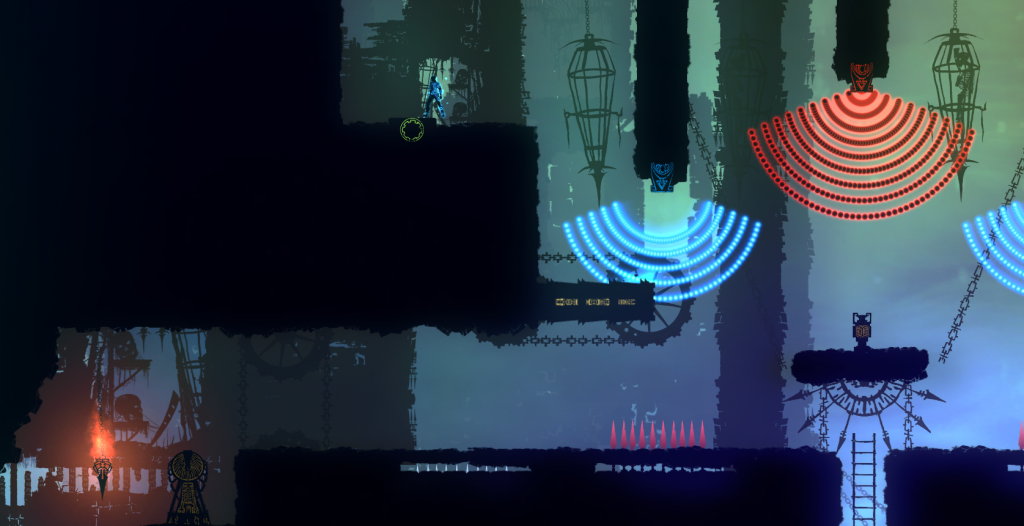
The premise is simple – there are blue things (enemies, lasers, spikes), and red things. When you are blue, you are immune to blue but can only damage red, and vice versa. You can tab your character back and forth between the two modes whenever you want. This simple rule set is so clear and consistent that it takes only a few seconds to understand how new layers are being added to each fault, allowing the player to focus almost exclusively on the rhythm and timing of jumps and colour swaps required to dance through each section.
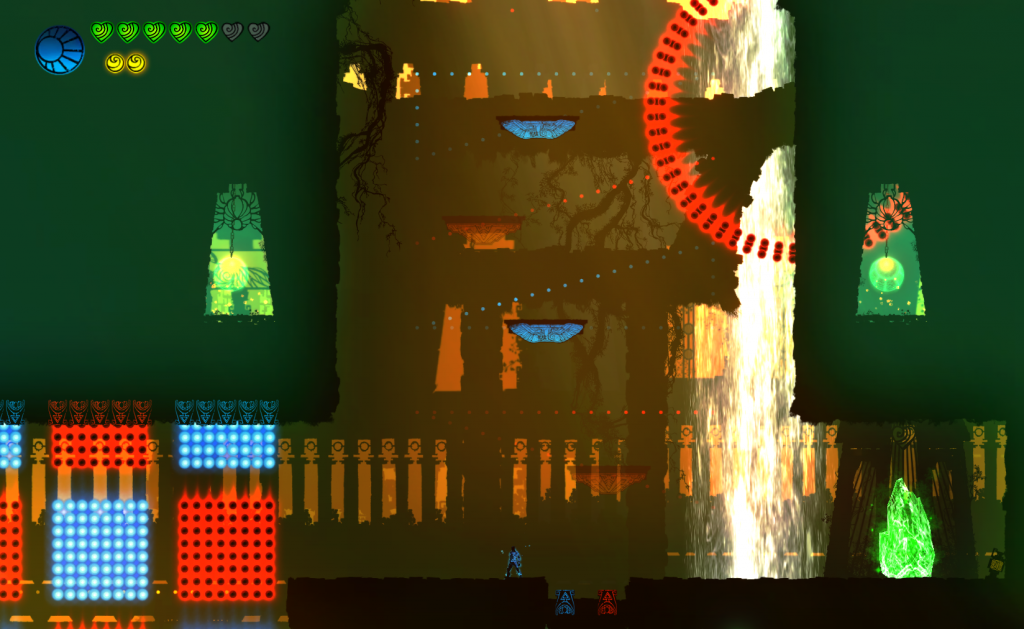
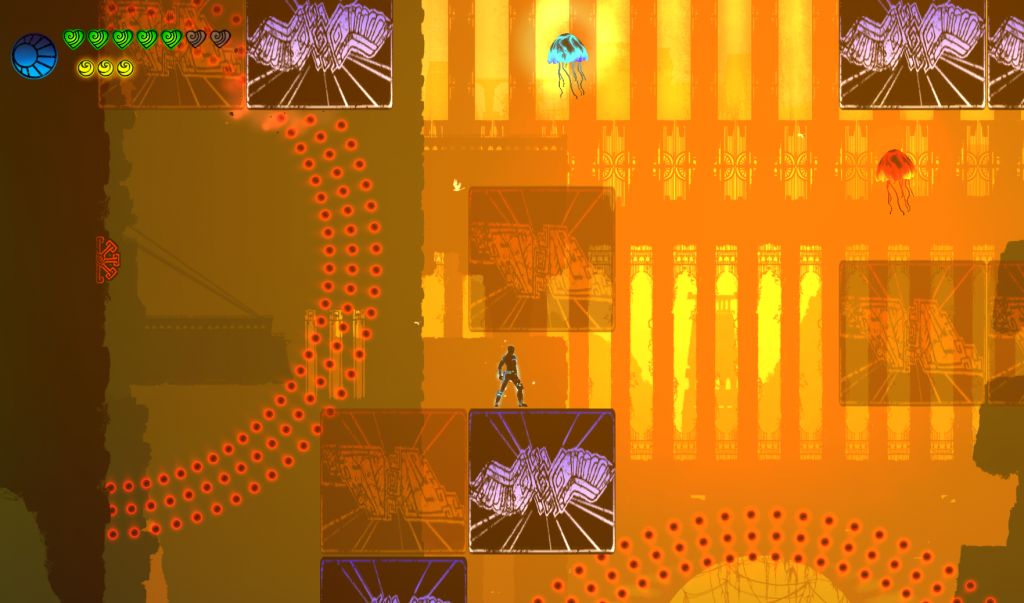
Just glancing at these, you can probably guess how to work through these sections. Tab blue and you can land safely on blue blocks, while passing through red ones. Often the challenges are fairly straight forward, but the bullet patterns are so artfully put together I ended up enjoying discovering each new room regardless.
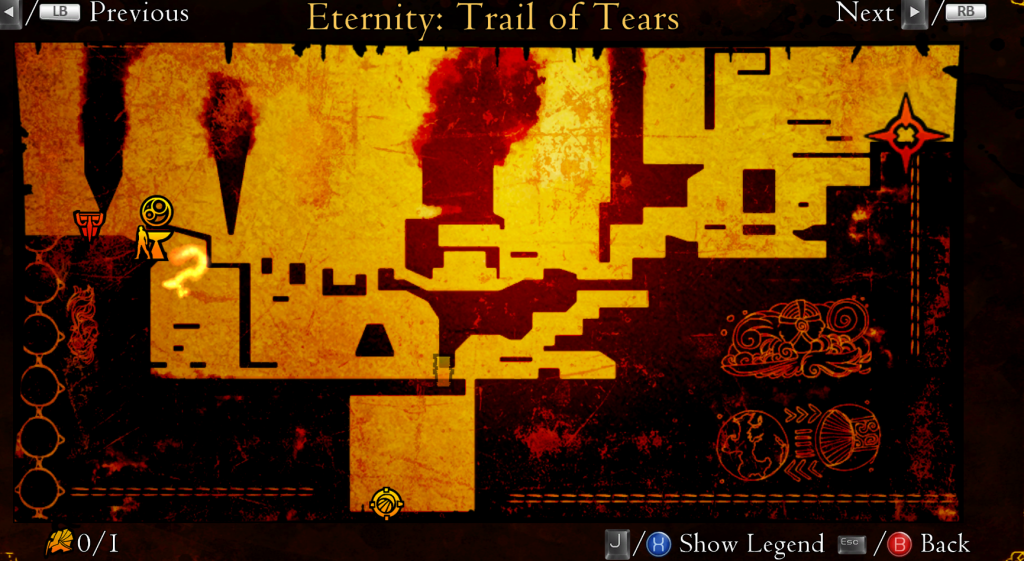
Following the best design styles of these 2d games, Outland teases the user early on by showing you areas of each map that you cannot access until you gain additional powers. This lets you see a path to gaining more abilities and returning to explore each section. In addition, all maps contain a few hidden sections with piles of coins, so poking your head left when the quest is to the right is often well rewarded.
The economy of the game is simple and focused. Enemies and vases release coins, and coins can be used to buy permanent health bar and energy bar upgrades at one-shot outposts sprinkled throughout the game. No equipment or weighty skill tree here – you will occasionally gain a new ability, but it will be a mandatory reward for overcoming a boss. There are also a few hidden pieces of Outland armour art you’ll come across while chasing extra coins along the cracks of each map.
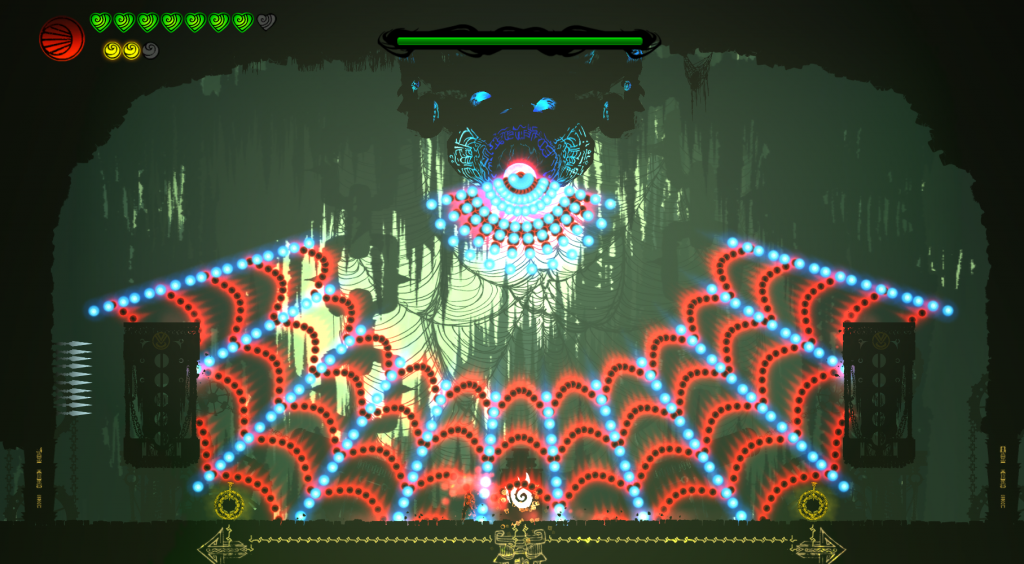
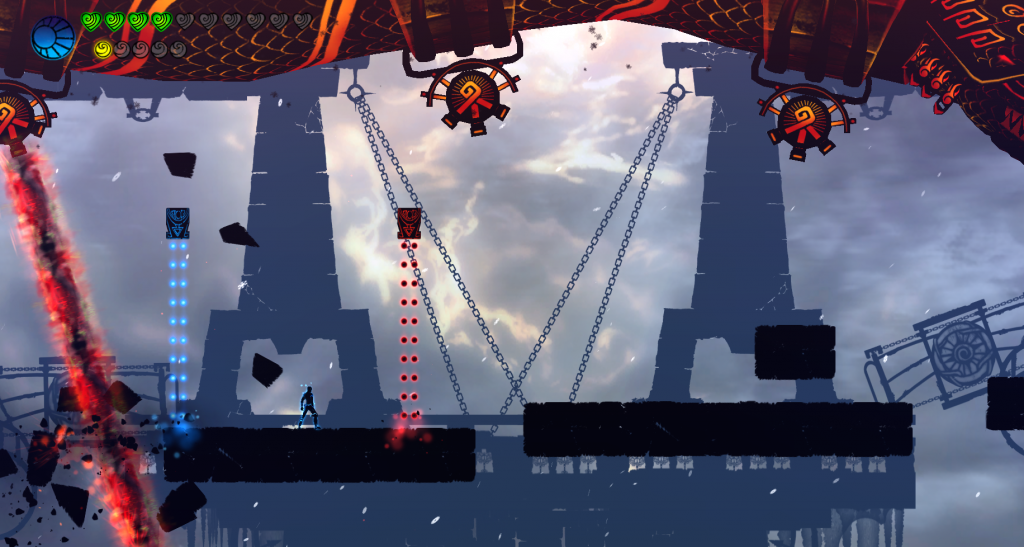
The bosses in this game are excellent. Above, I’m fighting a giant spider – his bullet attacks come out in beautiful, elaborate web sprays, and the player is tasked with slipping back and forth across the map to set up cannon blast shots to his face. Below, is stage one against a mechanical dragon, which involves a classic sky-scroller dash through a collapsing obstacle course. What they did right here is that the bosses are not a giant difficulty leap and they’re not something totally different – they are simply a sped up elaboration of the map navigating skills you’re using throughout the game.
In the first 30 minutes of play I was a bit worried the open-world game would leave you running back and forth across multiple maps looking for obscure keys. But once I understood the maps, the goals were very straight forward. A small set of floating leaves always point you towards your next goal, and you can happily focus on the map challenges while dashing after the objective. Maps clearly display goals and help you probe for bonus chests if you choose to take less-direct routes.
Overall I had a blast playing through Outland. The experience was smooth and fun all the way through, and the maps were a delight to work through. This is the kind of game I would be happy durdling around in past the finish line to try to 100% all the bonus treasures.
If I have one complaint it’s that the game was a little too easy. The actual map design was excellent, and there are many challenging segments. The single flaw is the one-shot life upgrades scattered around for purchase as you advance through the game.
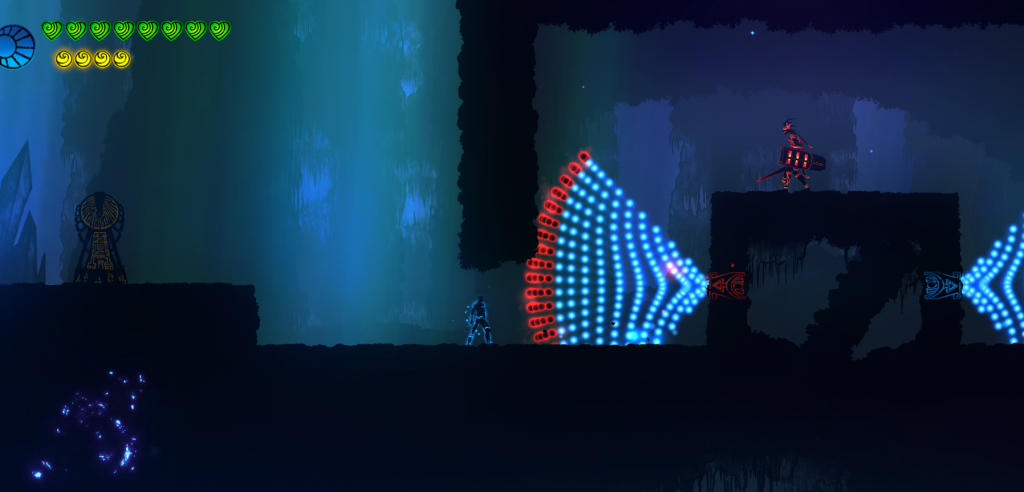
Glance at the top left – I’m maybe two thirds through the game here and I have eight hearts. Every hit I take removes one, and if you hit zero you respawn at the most recent checkpoint or map start point. Generally there are checkpoints generously placed every couple of faults you work through on the map.
Basically the problem is this – because my health bar is so big and the checkpoints are so close, I may be presented with an intricate bullet spray challenge that requires a practiced, perfect sequence of jumps, colour swaps and attacks to navigate, but instead of being forced to practice until you can beat it, you might just faceplant into it on your first attempt, fail every other jump and switch to the wrong colour three times… and still pop out the other end with three hearts left and hit a checkpoint.
I’m not disciplined enough to refuse an upgrade a game presents me with, but I honestly think this game would’ve been more fun to play through entirely with 2-3 hearts, forcing the player to master each section to the point of hitting near perfect jumps.
Because of the design, I ended up only getting that real rush of a do-or-die challenge in classic air platform sections, as the feeling of falling to the bottom of a pit and having to start climbing from scratch was more punishing than actually taking hits or dying in most cases.
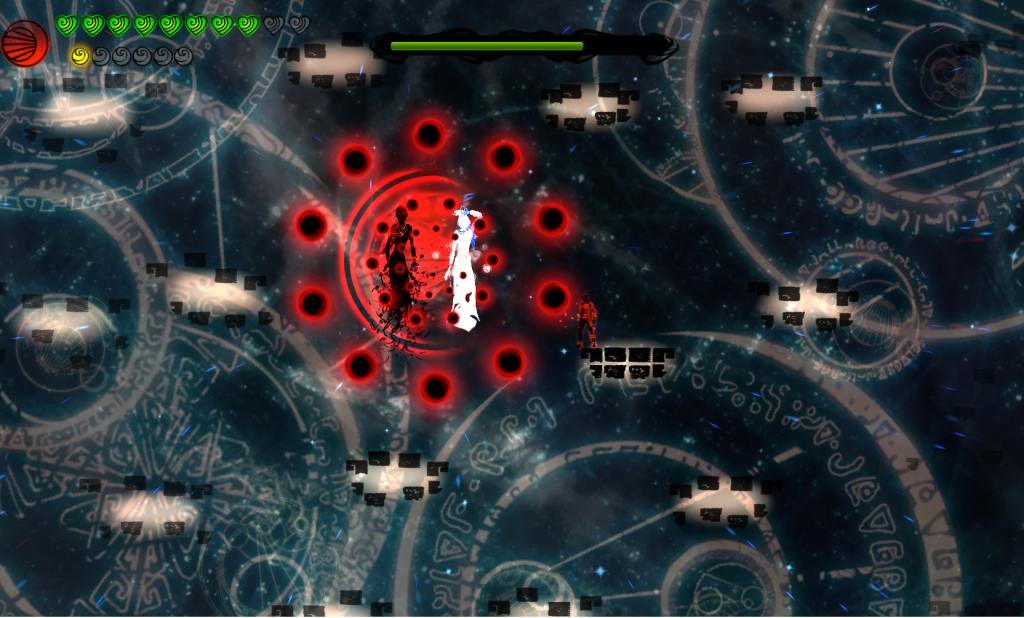
The final boss, the twin sisters, give you a classic three stage fight where you’re madly jumping across platforms while learning how to navigate different waves of alternating bullet patterns while taking out power nodes to expose the sisters to attacks. This one was properly challenging and took me a few nights to beat. I honestly thought I was only about 2/3rds through though, and was getting excited for the increased challenge just as it ended.
Too bad, but my gripes are minor – there doesn’t seem to be any difficulty settings, but I think just voluntarily not taking health upgrades on a second play through might bridge the gap perfectly. Overall this is an excellent game, top notch execution both in the artwork and in level design, and a pleasure to saunter through. Grade: A!